Finding Perspective After Cancer: Lessons from a Fallen Tree
A personal reflection on how changing the lens—not denying what has happened—can sometimes make a difficult path feel clearer.
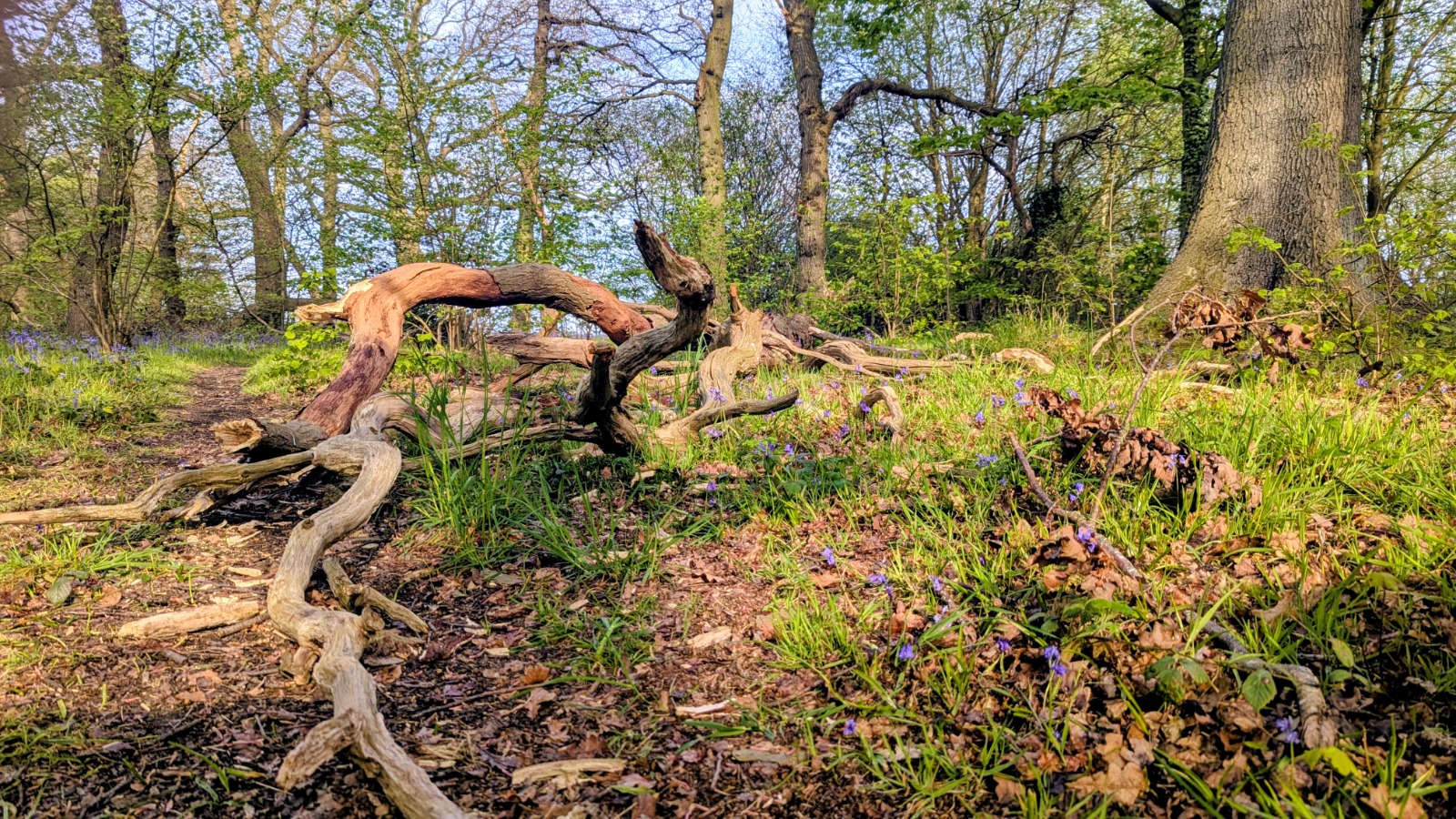
I have walked the same path through the local woods thousands of times. My dog knows every scent, and I know every turn. On this path, there is an old, weathered fallen tree. It has always struck me as beautiful, but for years, I couldn't capture that beauty on camera. I had hundreds of “almost” photos—blurry, dark or flat.
After seeking expert advice on lighting and composition, everything clicked. One morning, framed by the spring bluebells, I finally saw it clearly.
It wasn't the tree that needed to change. It was my lens.
When cancer changes the path you expected
In my work with Side by Side Cancer Support, I see something similar. A cancer diagnosis can feel like that tree—heavy, weathered and suddenly blocking the path you thought you were on. People and families can feel as though they are walking the woods alone, surrounded by medical language, difficult decisions and uncertainty.
Support cannot remove what has happened. It can, however, help someone understand the information in front of them, find the questions they want to ask and notice where they still have choices. Sometimes that clearer view is enough to make the next step feel possible.
Perspective is not forced positivity
It does not mean looking for a silver lining, minimising fear or pretending cancer has not changed things. It means making room for the full reality while finding information, support and a way forward that feels right for you.
What the right support can help you see
The “bluebells” will look different for everyone. They may be moments of clarity, a concern finally being heard, the confidence to ask for a second opinion, or the relief of explaining to family what support would actually help.
- The important information within an overwhelming conversation
- Questions you want to take into your next appointment
- Where a choice exists and where your clinical team needs to guide you
- Practical and emotional support for you and the people around you
If you are trying to make sense of a recent diagnosis, explore my newly diagnosed cancer support. If you are supporting someone else, the family, friends and carers page explains the support available to you too.
Would a clearer conversation help?
A free 15-minute chat gives you space to explain what you are facing and decide whether specialist nurse-led support feels right for you.
I'm here to walk side by side with you.
Rachel
Rachel Mugnai is an NMC-registered Specialist Cancer Nurse with more than 25 years of oncology nursing experience.
This reflection offers general supportive information. It does not replace assessment, diagnosis or advice from your oncology team, clinical nurse specialist, GP or another qualified healthcare professional.
Related cancer support
Specialist support for this stage
Surgery and what comes next — newly diagnosed support
Find out more about surgery and what comes next — newly diagnosed supportRelated articles

Managing Cancer-Related Fatigue: The Current Account & ACE Strategy Guide
Read “Managing Cancer-Related Fatigue: The Current Account & ACE Strategy Guide”
Rebuilding Intimacy After Cancer: Gentle Ways to Reconnect with Yourself and Your Partner
Read “Rebuilding Intimacy After Cancer: Gentle Ways to Reconnect with Yourself and Your Partner”Would a conversation help?
A free 15-minute chat gives you space to talk through what you are facing and decide whether specialist nurse-led support feels right.
Book your free 15-minute chat